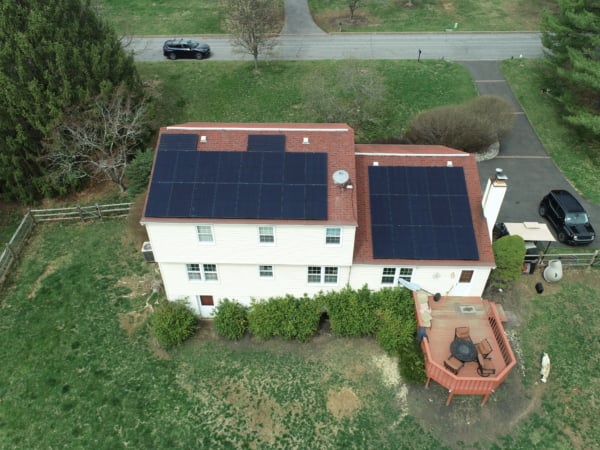
For many years, the federal solar tax credit was one of the biggest drivers of solar adoption in the United States. At the end of 2025, that incentive came to an end for residential homeowners. If you’re considering solar in 2026, you’re probably asking one simple question:
Does solar still make financial sense without the 30% tax credit?
In this article we will break down what solar looks like in 2026.
What Changed in 2025?
After the passing of the One Big Beautiful Bill Act on July 4, 2025, the residential solar tax credit under Section 25D was officially eliminated for systems installed beginning in 2026.
Once the news spread, homeowners rushed to go solar before the December 31, 2025 deadline. The demand was unprecedented. At certain points during the year, many installers could no longer guarantee installation before year-end. Permitting, engineering approvals, and utility interconnection timelines made it impossible to promise the tax credit for projects signed late in the year.
By early fall, most reputable installers had to tell homeowners the truth: installation before December 31st was no longer realistic.
Yet something interesting happened.
Even after learning they would miss the 30% tax credit, many homeowners moved forward with solar anyway.
Why?
Increased Residential Electric Rates
In 2025, electric rates rose sharply in the markets where Public Service Solar operates: New Jersey, Pennsylvania, and Florida.
In New Jersey, the New Jersey Board of Public Utilities approved new electricity prices based on the annual Basic Generation Service (BGS) auction. Those changes took effect on June 1, 2025 and resulted in residential rates increasing approximately 17–20% year-over-year.
Across the river in Pennsylvania, utilities like PECO saw electric rates increase by roughly 10% in 2025, driven by higher supply and capacity costs.
Florida saw more modest increases, but long-term rate trends continue upward, with regulators approving multi-year adjustments tied to infrastructure and fuel costs.
The reality is simple:
Electricity prices trend upward over time due to inflation, grid upgrades, fuel volatility, and increasing demand for new data centers and artificial intelligence infrastructure.
Solar addresses the core issue: rising electricity costs.
The tax credit helped improve returns. But solar’s fundamental value comes from producing electricity at a predictable cost while utility rates continue to rise.
Supply and Demand in 2026
The 2025 tax credit rush created an unusual market dynamic.
Installers expanded rapidly to meet demand. Companies that once operated with a single crew suddenly needed multiple crews. Overtime, expedited permitting, and compressed timelines became the norm.
High demand + limited installation capacity = premium pricing.
When the rush subsided at the end of 2025, the supply-and-demand balance shifted.
In 2026:
- Demand normalized.
- Installation capacity remained elevated.
- Pricing pressure shifted back toward the consumer.
Many homeowners installing in 2026 are paying significantly less than those who rushed to install in 2025. In some cases, system pricing is down substantially compared to peak tax-credit demand.
Ironically, some 2026 buyers are paying less upfront — even without the tax credit.
Solar PPAs and Solar Leases
Here’s something many homeowners don’t realize: While the residential tax credit ended, commercial solar was not eliminated.
Commercial projects can still qualify for the 30% Investment Tax Credit under current federal law, subject to begin-construction and placed-in-service deadlines.
That matters because in a solar lease or Power Purchase Agreement (PPA), the system is owned by a financing company and by not the homeowner.
Because the financing company owns the system:
- They can claim the commercial tax credit.
- They may qualify for accelerated depreciation (MACRS).
- In states like NJ and PA, they may receive SREC income.
These incentives reduce the effective cost of the system to the owner with the result being lower monthly payments for homeowners.
In 2026, it is common to see:
- $0 down solar PPAs
- Fixed rates
- Monthly payments lower than what comparable solar loans required just months earlier
The structure changed. The savings did not disappear.
Not Everyone Qualified for the Solar Tax Credit
The 30% tax credit was never automatic.
To fully benefit, a homeowner needed enough federal tax liability to absorb the credit. For example:
A $25,000 system would generate a $7,500 tax credit.
If the homeowner did not have sufficient tax liability, the credit could be rolled forward sometimes for multiple years.
This created complications with solar loans.
Many loan structures assumed the homeowner would apply the full 30% credit toward the loan principal within 12–18 months to maintain a lower payment. If that lump-sum payment was not made, monthly payments could increase significantly. For some homeowners, this created unexpected financial pressure.
In that sense, 2026 financing models are actually simpler:
No tax timing assumptions.
No lump-sum principal reduction requirements.
No uncertainty around qualification.
So Does Solar Still Make Sense in 2026?
The better question might be:
Does it make sense to continue buying electricity from a utility company that raises rates almost every year?
Let’s look at this logically.
In New Jersey, residential electric rates jumped roughly 17–20% in 2025.
In Pennsylvania, many homeowners saw increases around 10%.
Even in Florida, long-term rate trends continue upward.
Utility rates rarely go down. Over a 25-year period, they almost always rise.
If your electric rate today is $0.25 per kWh and it increases just 3% per year, that rate becomes:
- $0.29 per kWh in 5 years
- $0.34 per kWh in 10 years
- Over $0.50 per kWh in 25 years
That means the same electricity you use today could cost double in the future.
Now compare that to solar.
With modern solar financing especially through Power Purchase Agreements (PPAs), many homeowners in 2026 are locking in electricity rates around $0.10 per kWh fixed, often with $0 down.
That means:
• You are paying about 40% of what the utility charges today
• Your rate does not rise with inflation
• Your payment is predictable for 20–25 years
• You eliminate exposure to future rate hikes
The tax credit used to improve returns. But the real value of solar has always been this:
You control your cost of electricity instead of the utility controlling it.
And in many cases in 2026, the monthly savings from locking in a low solar rate outweigh the loss of the tax credit. Especially as utility prices continue to climb.
The Bottom Line
Solar is no longer about capturing a tax incentive. It’s about protecting yourself from rising electricity costs.
If your utility rate is high and likely to increase, locking in a lower fixed rate through solar can still produce substantial long-term savings. The structure changed but the math still works.
To get started with your 2026 solar install, contact Public Service Solar today!