
What Size Home Battery System Is Right for You?
Tell us how you want to use your home during an outage. We’ll recommend a preliminary battery size and show your estimated installed price.
How do you want to use your home during an outage?
Battery sizing is driven by how much power you expect to use at one time—not simply by adding up appliance energy estimates.
How will you use your normal 120V household circuits?
Will solar panels be integrated with the battery system?
Which larger equipment would you like available during an outage?
Select the larger appliances or equipment you would want the option to use. You do not need to know the voltage, amps, or technical specifications.
Would you be comfortable using larger appliances one at a time during an outage?
Your preliminary battery recommendation
We recommend a system size based on how you expect to use 120V and 240V loads during an outage.
1 Battery
Compare Battery Platforms
Get My Battery Design
Send us your preliminary recommendation and our in-house team will verify the equipment and electrical requirements for your home.
Free battery design. No obligation.
By clicking Get My Battery Design, you authorize Public Service Solar to contact you by phone, email, and/or SMS regarding our products and services, even if your number is listed on a federal or state Do Not Call registry. Consent is not a condition of purchase. Message and data rates may apply. You may opt out at any time. Please review our Privacy Policy.
Installed by Certified Experts
Public Service Solar is certified by the industry’s leading battery manufacturers, ensuring every system is installed to the highest standards.

FranklinWH Certified Installer
Certified to install FranklinWH whole-home battery systems for reliable backup power and seamless integration with solar.
Recent projects from your neighbors.
Here goes your text … Select any part of your text to access the formatting toolbar.
How much can I power with my battery?
How much your battery can power in your home depends on both the kWh capacity of the battery unit and the ampacity of the appliances you are supporting. The battery units range in size and can also be “stackable,” allowing you to connect multiple batteries together at one time for more ampacity.
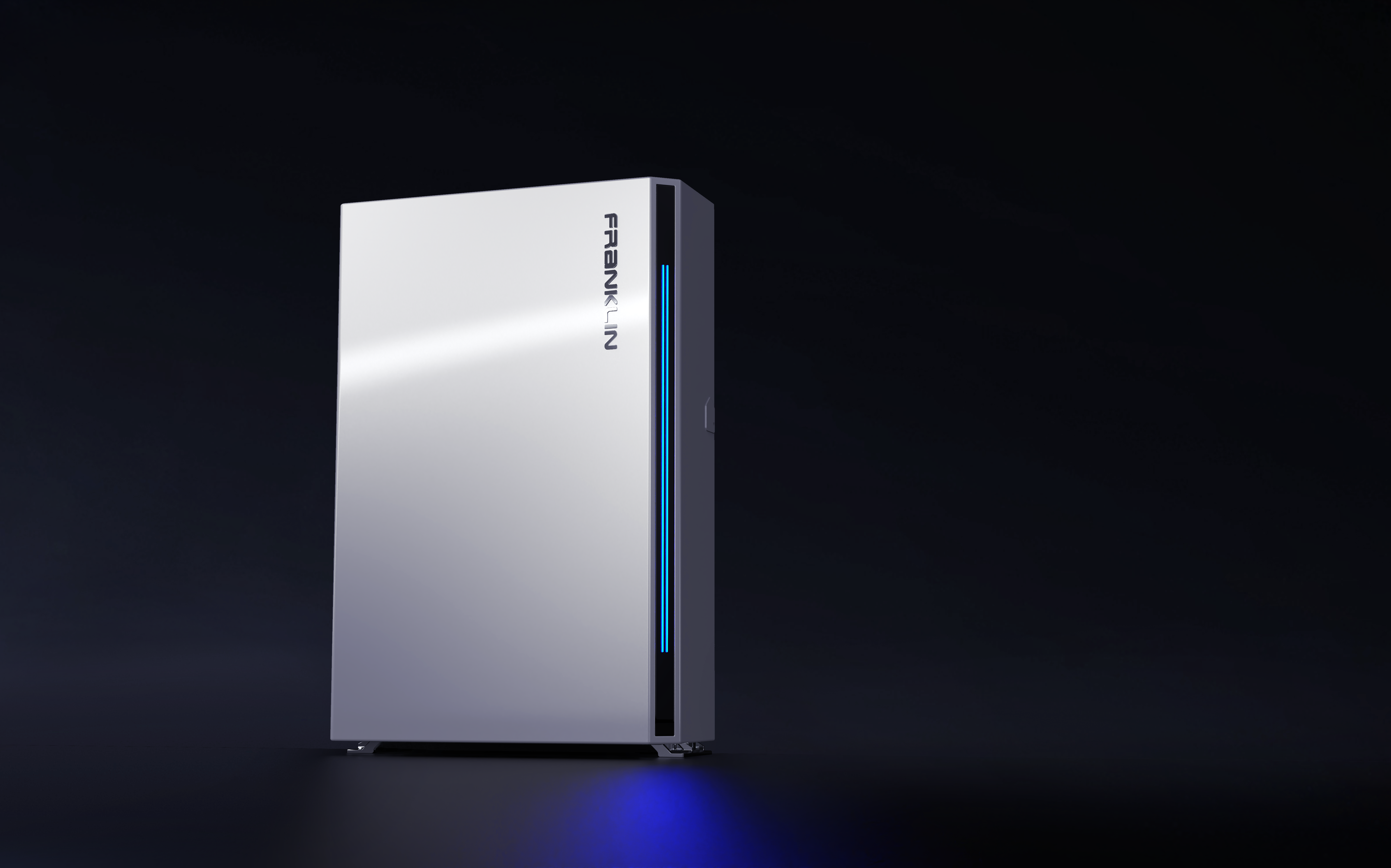
For example, the FranklinWH home battery system offers a 15 kWh of store capacity.
In your home, a 100-watt appliance running for 10 hours will use 1 kWh (1,000 watt hours). The good news for solar batteries is that they can recharge while the sun is shining, allowing you to have backup power indefinitely. A best practice is to engineer a system size that allows you to power the primary loads in your home for 72 hours without the solar modules seeing sunshine.
Expect to identify primary loads in the home for the battery to power during an outage. A refrigerator, lights, well pump, computer, phone, TV, microwave, sump pump, and electric range operating during normal daily conditions will collectively use just over 15 kWh in a day.
Can a battery replace a backup generator?
For many homeowners, yes. Battery storage provides quiet, automatic backup power without the fuel, maintenance, noise, or emissions associated with traditional generators. Batteries can keep your home running during outages and can be recharged by solar energy during the day. For areas prone to extended multi-day outages, some battery systems can also integrate with a generator to provide even greater energy security.
How long will my battery last during an outage?
Battery runtime simply depends on the size of the battery system and the amount of electricity being used. A battery powering only certain essential loads can often provide backup power for days when paired with solar.
Homes running large appliances such as air conditionings, pool pumps, or electric vehicle chargers will require more battery capacity to achieve longer backup durations. With a large enough solar installation, the batteries can continue to charge indefinitely.
How much does battery storage cost?
Like solar, the cost of battery storage can vary based on how much energy storage is needed. Batteries are scalable, meaning you can add just one for smaller applications or several for a larger use case. On average, expect the net cost of a battery system from Public Service Solar to cost under $15,000.
This brings the cost to a price comparable to a traditional whole home generator. Some considerations when comparing the cost of battery storage to traditional generators are the fuel cost needed to operate the generator as well as the yearly motor maintenance which may be required. Battery projects are eligible for financing. Many of our customers can have a solar plus battery storage system installed for no money down.
Can I install battery storage without solar?
Yes, you can install batteries without solar but they will be limited to their rated capacity without an ability to recharge. Stand alone battery storage without solar will get its initial charge from the grid.
In an area where a traditional gas generator is not possible due to unavailable natural gas connections, battery storage can be a good option. Just be sure that you are installing a large enough battery unit or units to meet your needs and are comfortable with the fact that the battery will not recharge.